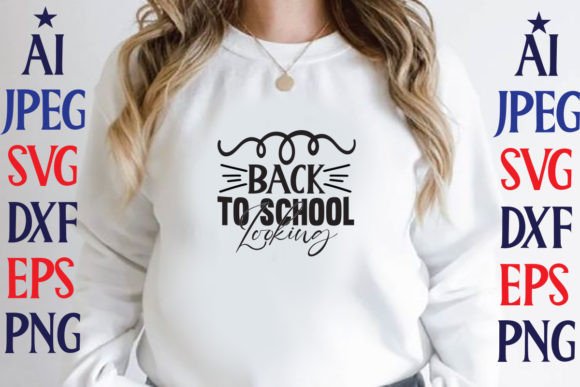
Back to School Looking: A Practical Guide for Digital File Selection
When preparing for the new school year, many individuals and organizations seek efficient and effective ways to manage their digital assets. Back to School Looking refers to the process of evaluating and selecting digital files that support educational or organizational needs. This approach often involves acquiring a set of digital files designed for use in various applications, such as graphic design, printing, or digital marketing.
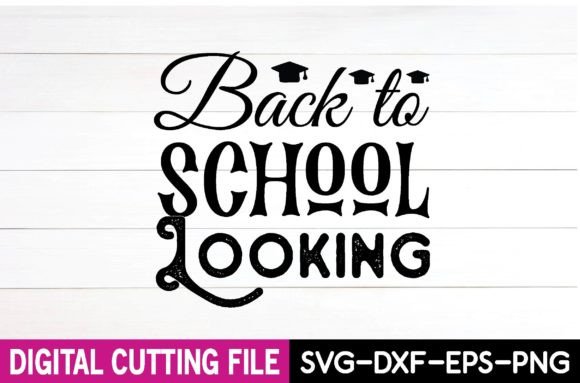
The digital files typically included in a Back to School Looking package may consist of one AI file, one SVG file, one PNG file, one EPS file, and one DXF file. These formats are chosen for their compatibility with different software programs and their ability to maintain quality across multiple platforms. Understanding the purpose and functionality of each file type can help users make informed decisions about their digital asset selection.
Why Consider Back to School Looking?
There are several reasons why someone might be interested in Back to School Looking. For educators, it could mean finding high-quality graphics for classroom materials, presentations, or student projects. For businesses, it might involve creating consistent branding elements for promotional campaigns or internal communications. Additionally, individuals who work in creative fields may benefit from having access to versatile digital files that can be used across different projects and platforms.
One of the primary advantages of Back to School Looking is the convenience of instant download. After purchasing a digital file package, users receive a link to download their files immediately. This eliminates the need to wait for physical items to arrive, which can be particularly beneficial for those with time-sensitive projects or urgent needs.
Benefits and Tradeoffs of Digital Files
Using digital files offers numerous benefits. They are easy to store, share, and edit, making them ideal for collaborative projects or remote work environments. Additionally, digital files can be scaled without losing quality, which is especially useful when designing materials for different sizes or mediums.
However, there are also tradeoffs to consider. Digital files require specific software to open and edit, which may not be accessible to everyone. Some users may find it challenging to work with advanced file types like AI or EPS without the appropriate tools. Furthermore, while digital files are convenient, they do not provide the same tactile experience as physical items, which may be a consideration for certain applications.
Situations Where Back to School Looking Fits Well
Back to School Looking is particularly well-suited for individuals or organizations that prioritize efficiency and flexibility. For example, a teacher looking to create visually engaging lesson plans may find value in having access to a variety of file formats that can be used in different software programs. Similarly, a marketing team working on a school-related campaign may benefit from having high-resolution images and scalable vector graphics that can be adapted for various media.
This approach is also beneficial for those who work in fast-paced environments where quick access to digital assets is essential. The ability to download files instantly allows users to start their projects immediately, reducing delays and improving productivity.
When Alternatives May Be Worth Considering
While Back to School Looking offers many advantages, it may not be the best option for everyone. Individuals who prefer physical materials or have limited access to digital tools may find it more practical to explore other options. In some cases, traditional printed materials may be more suitable for specific applications, such as classroom displays or handouts that require a tangible format.
Additionally, users who are not familiar with digital file formats may need to invest time in learning how to work with these files effectively. This could be a barrier for some individuals, particularly those who are not technologically inclined. In such cases, seeking assistance from a professional or using user-friendly software may be a better alternative.
Practical Insights for Decision-Making
When deciding whether Back to School Looking aligns with your goals, it's important to assess your specific needs and capabilities. Consider the types of projects you will be working on and the software you have available. If you frequently work with digital assets and have the necessary tools, this approach can be highly beneficial.
It's also helpful to evaluate the compatibility of the files with your existing workflow. Ensuring that the files you choose can be easily integrated into your current processes will save time and reduce potential complications. Additionally, reviewing the features and limitations of each file type can help you make more informed decisions about which files are most suitable for your needs.
Finally, take advantage of any resources or support available to you. Many digital file providers offer documentation, tutorials, or customer assistance to help users understand and utilize their products effectively. By leveraging these resources, you can maximize the value of your digital assets and enhance your overall experience with Back to School Looking.